samedi 7 février 2026

Coffee and Vinegar: A Game-Changing Duo for Radiant Skin

by


Coffee and Vinegar: A Game-Changing Duo for Radiant Skin

When it comes to natural skincare, some of the most effective treatments can be found right in your kitchen. Two unlikely heroes—coffee grounds and apple cider vinegar—team up to exfoliate, brighten, and rejuvenate your skin. This powerful duo offers a budget-friendly way to achieve a radiant glow without expensive products.

Why Coffee is a Skincare Superstar

Coffee does more than fuel your mornings—it also revitalizes your skin:

  • Exfoliates Naturally – The coarse texture of coffee grounds gently removes dead skin cells and unclogs pores.

  • Packed with Antioxidants – Protects your skin from free radicals and helps reduce signs of aging.

  • Boosts Circulation – Improves blood flow, reducing puffiness and promoting a healthy tone.

  • Brightens – The caffeine in coffee helps calm redness and inflammation, leaving your skin more even.

The Benefits of Apple Cider Vinegar (ACV)

Apple cider vinegar has been a skincare staple for generations:

  • Balances pH Levels – Helps restore the skin’s natural barrier.

  • Fights Breakouts – Its antibacterial properties combat acne-causing bacteria.

  • Tightens & Tones – Acts as a natural astringent to minimize pores and oiliness.

  • Gentle Exfoliation – Thanks to natural AHAs (alpha hydroxy acids), it promotes cell turnover.

Why They Work So Well Together

When combined, coffee and ACV complement each other perfectly:

  • Coffee exfoliates and stimulates circulation.

  • Vinegar tones, balances, and clarifies.

The result? Softer, smoother skin with a natural glow—especially helpful for dull, dry, or acne-prone skin.

DIY Coffee & Vinegar Skin Treatment

Ingredients:

  • 2 tablespoons coffee grounds (used or fresh)

  • 1 tablespoon apple cider vinegar

  • 1 tablespoon water (to dilute vinegar)

  • Optional: 1 teaspoon honey for extra hydration

Instructions:

  1. Mix coffee grounds, vinegar, and water in a small bowl until a paste forms. Add honey if desired.

  2. Apply to your face in gentle circular motions, avoiding the eye area.

  3. Leave on for 5–10 minutes.

  4. Rinse off with warm water and pat dry.

  5. Follow with your favorite moisturizer.


How Often to Use

  • Sensitive skin: Once a week

  • Normal to oily skin: 2–3 times per week

Precautions

  • Always do a patch test before first use.

  • Dilute the vinegar—never apply it directly to the skin.

  • Don’t over-exfoliate; moderation is key to protecting your skin barrier.

The Results You’ll Notice

  • Softer, smoother texture

  • A brighter, more even complexion

  • Reduced acne and inflammation

Final Thoughts

Coffee and apple cider vinegar may not be the first ingredients you think of for skincare, but together they’re a powerhouse. Affordable, natural, and easy to prepare, this DIY treatment is perfect for anyone looking to glow without breaking the bank.

There’s a hidden switch on the washing machine

by


There’s a hidden switch on the washing machine

Hidden switch on the washing machine.

This hidden switch is located in the lower right or left corner of the washing machine, on the surface there is a small coverTo pry open this lid, use a coin and you will see dirty water flowing out. Additionally, you should also clean the rectangular filter box on the inside of the washing drum. Because if you do not clean it regularly after a period of use, a lot of lint will stick here, making clothes easily dirty after washing. So, it is best to remove this filter box every week to clean it.

The trick for hotels to always have very soft towels

by


The trick for hotels to always have very soft towels

When we stay in a hotel, one of our greatest pleasures is to enjoy the softness of the towels. They are so soft, delicate, and fragrant. Nothing to do with our swimwear, sometimes rough, unpleasant to the touch, fluffy and sometimes even with a musty smell. Why is the gap so large? Simply because our washing habits are not always adequate. Between limescale, humidity and abuse, it’s no wonder that our towel fabric takes a hit and looks questionable.

Do you want to know the advice of the professionals? To have very soft and comfortable towels at home, without even using fabric softener, here are some tips to follow closely.

How to have towels as soft as in hotels?

Do your new bath towels become hard, rough, and itchy after just a few washes? This hotel washing routine will make your hotels much nicer and fluffier without even needing fabric softener.

To have very soft towels, it is important to follow a protocol that will be decisive throughout their useful life. First of all, get into the habit of rinsing them only with cold water.

  • Step One: Limit the Dose of Fabric Softener

We always thought that fabric softener was the solution to all problems. Except that, by dint of washing and setbacks, we realize that the chemicals present in industrial fabric softeners are not so beneficial for the fibers of the fabrics. In the long run, its constant use ends up having the opposite effect. Therefore, it is best to use it sparingly.

  • Step Two: Wash Towels Separately

To prevent fabrics from absorbing bacteria from the dirt of other garments in the washing machine drum, it is recommended to pre-sort them and wash them separately. Opt for a temperature that ranges between 40 and 60°C. To avoid making mistakes, always be careful with the labels on your towels!

  • Step Three: The Soft Towel Trick
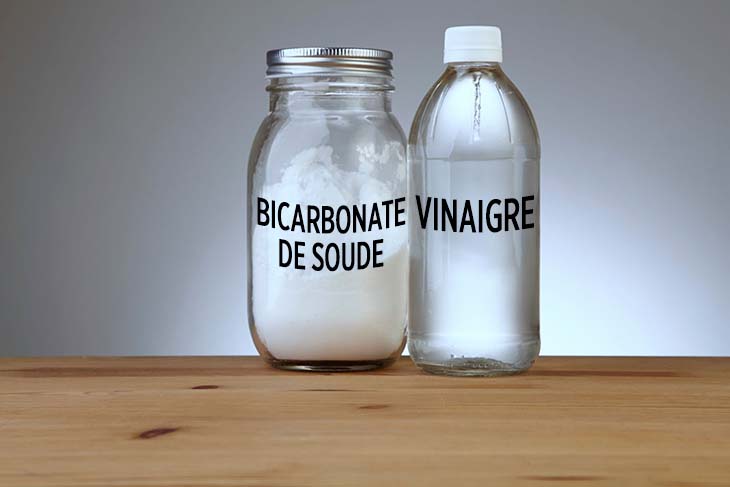
  • This homemade method highlights the use of two natural ingredients that have been extensively tested in various household chores: baking soda and white vinegar. This powerful duo has formidable cleansing, stain remover, antibacterial, whitening and deodorant properties. As an added benefit, this solution is effective against excess limescale, moisture, and mold. Therefore, it is the ideal solution to have perfectly clean, soft and fluffy towels.

    How to use: Add baking soda to the detergent drawer of your washing machine. This white powder will fight dirt, whiten the fabric and neutralize bad odors. Then, add the white vinegar to the fabric softener drawer (until completely filled). This product will disinfect the towels, while providing them with softness and freshness. To add a delicately scented touch to your swimwear, feel free to add a few drops of lavender essential oil or the scent of your choice.

    NOTE : If you live in an area where the water is very hard, you can refill with an anti-limescale cleaner.

    Washer Fit – Source: spm

    3 tips for impeccable towels

    Ditch the use of chemicals! Your bath towels can become softer and more comfortable without using substances that can damage the fibers of the fabrics.

    1. Set the temperature of your washing machine to 30°C
    2. Certainly, it is often advisable to wash bath towels and bed linen at 60°C to remove any build-up of bacteria, grease or stubborn stains. But, if you want to keep your towels soft and fluffy for longer, it is advisable to set the washing machine to 30°C.

      1. Add essential oil to make your towels smell good

      To keep your swimwear very fresh and delicately scented, it’s fashionable to use essential oils. Lavender, sweet orange or mint, it all depends on your preference. Simply add 2-3 drops to your rinse cycle, after you have poured in the white vinegar. This will add a soft and subtle scent to your clothes.

      1. Dry your towels in the dryer

      Finally, the last rule of thumb: for soft, fluffy towels, we recommend using the dryer. Follow the instructions on the label to apply the specific temperature setting. Otherwise, choose the medium setting and make sure they are completely dry before storing them in the cupboard. Remember: the slightest trace of moisture can generate mold and bad odors.

      👉 Follow our page, like 👍, and share this post. Every click can make a difference—perhaps saving your own life or that of a loved one.

Unearth The Retro Tech Solution That’s Been Hiding In Plain Sight!

by


Unearth The Retro Tech Solution That’s Been Hiding In Plain Sight!

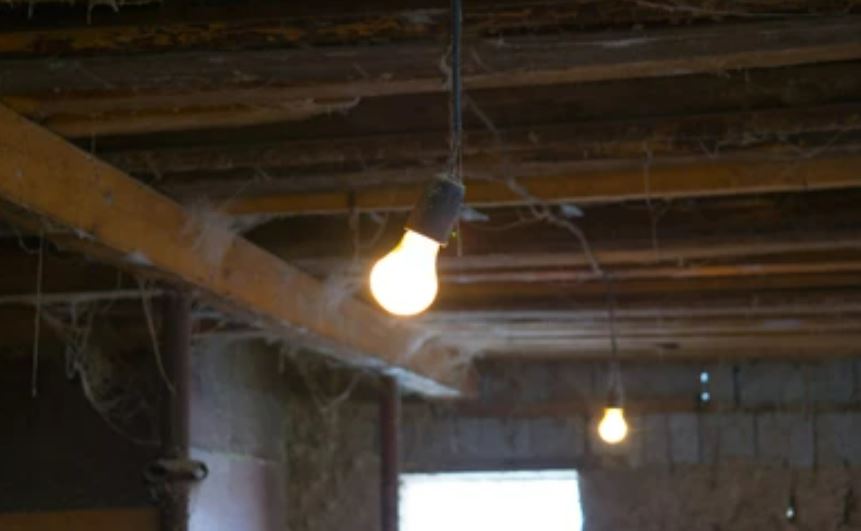
In the days when basements were mysterious realms filled with cobwebs, dusty treasures, and the occasional forgotten relic, there existed a quaint yet ingenious solution to illuminate these subterranean spaces—the basement light indicator. Long before the era of smart homes and automated lighting, homeowners relied on a simple yet effective method to signal the status of the basement lights.

The classic indicator consisted of a small, inconspicuous device often mounted near the entrance of the basement. This unassuming contraption featured a red and green light, each with a specific purpose. The green light, akin to a sentinel, signaled that the basement lights were on and all was well. In contrast, the red light warned that the basement lay in darkness, urging the occupant to tread cautiously or fetch the nearest light switch.

The charm of the old-school basement light indicators lies not only in their simplicity but also in the nostalgia they evoke. In an age where automation and smart technologies dominate our homes, these relics from the past stand as a testament to human ingenuity. They embody a time when practical solutions were crafted with simplicity and elegance, adding a touch of personality to the functional aspects of everyday life.

Unearth The Retro Tech Solution That’s Been Hiding In Plain Sight!

As we navigate the future with increasingly advanced technologies, let us take a moment to appreciate the humble basement light indicator—a small yet significant piece of the past that illuminated not only the dark corners of our homes but also our collective journey through time.

Uncovering The Mystery Behind This Hidden Wall Cabinet In 1930s Homes!

by


Uncovering The Mystery Behind This Hidden Wall Cabinet In 1930s Homes!

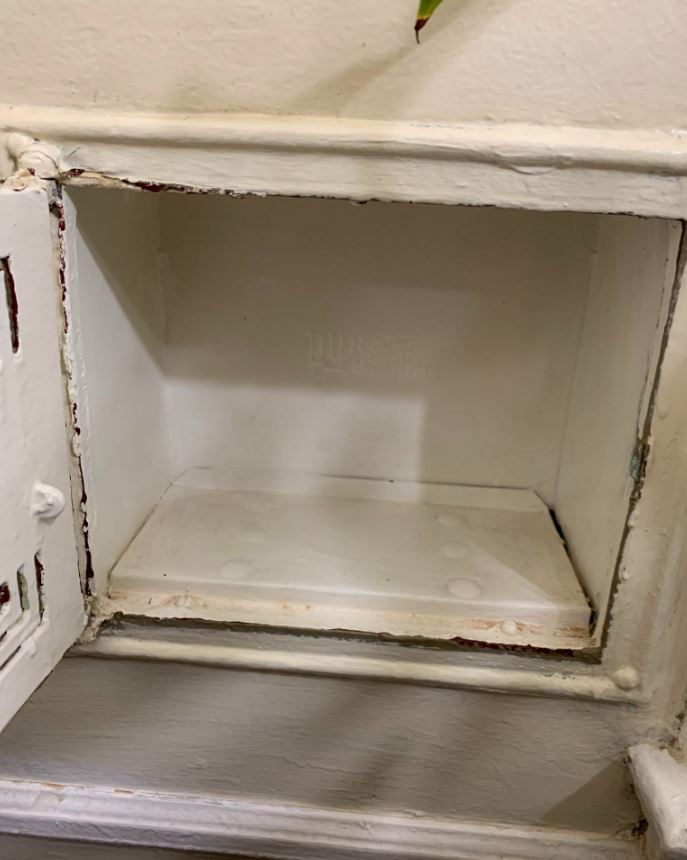
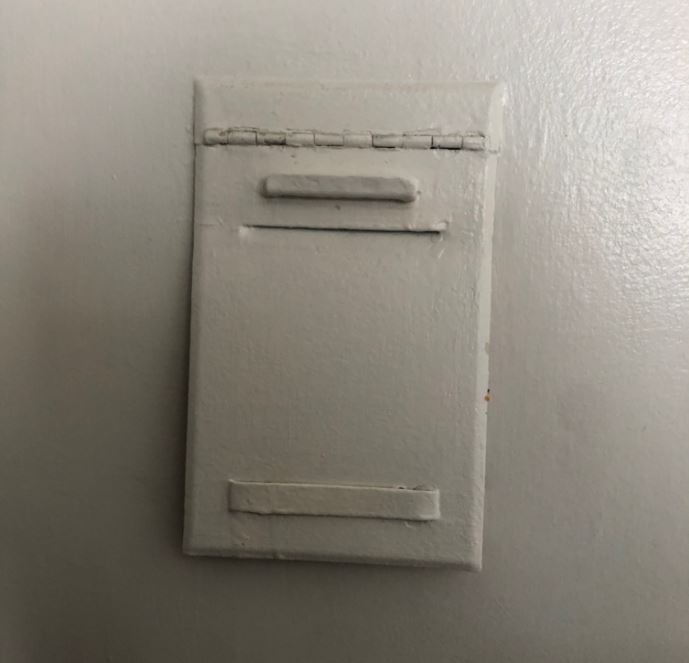
You open a door in your wall and see a cool little recessed mustered-up area, with a dowel inside. To a modern home buyer, this may seem like an oddball relic. But to someone more accustomed to home interpretations of the 1930s, it’s a classic piece of history. This gaping, recessed cabinet is most likely a built-in ironing board holder. It is a quick-fix that captures the era’s ingenuity and power. This hidden wall cabinet was a common feature in older homes.

The Rise of the Hidden Wall Cabinet in the 1930s

Early-20th-century home design moved toward maximizing efficiency and convenience in service of household chores such as ironing. By the 1930s, homeowners were valuing compact and functional layouts more highly. People wanted built-in features like a hidden wall cabinet. This was when the hidden ironing board cabinet was born. This design allowed homeowners to easily retrieve their ironing boards. It also, in the meantime, kept worthwhile floor or storage space.

But there were no laughing matters about ironing boards then. They did a lot of ironing of clothes. Most people made clothes from natural fibers — cotton or linen — that creased easily. These fold-out ironing stations worked in contrast to today’s freestanding boards that monopolize valuable real estate in a home, as homeowners pulled these down easily when they were in need and folded them up and buttoned them away just as quickly. This ensured the room stayed neat and ran efficiently. The hidden wall cabinet really helped keep the space tidy.

A Little Luxury: The Recessed Ironing Board Cabinet

Recessed ironing board cabinet: This may be a mini-feature now, but it was a little bit of luxury in the 1930s. These cabinets were often manufactured by a company named Durasteel. This firm provides fire-resistant cladding and home hardware. These are designed to last. They are practical and can stand the test of everyday usage. When looking at a hidden wall cabinet, it’s easy to see why they were popular.

These built-ins had a practical function, particularly in Southern California houses where space can be tight. As domestic space contracted and household rhythms settled into a predictable churn, homeowners tended to situate the cabinet most effectively in relation to their activities and daily trajectories. Think laundry room, or kitchen. It made it easier for the homemaker to iron clothes, table linens and towels. The board folded up into the wall when the ironing was finished. The door shut to hide it.

Despite Her Father Success in Music His Daughter Ends Up Living on the Streets

by


Despite Her Father Success in Music His Daughter Ends Up Living on the Streets

For decades, the world has watched Dr. Dre rise from a young producer in Compton to one of the most influential figures in music history, building an empire worth hundreds of millions. But behind the fame and fortune lies a heartbreaking story few expected — the struggle of his eldest daughter, 38-year-old LaTanya Young. In a candid interview, LaTanya revealed that she has spent months living out of a rented SUV with her four children, working odd jobs just to get by, and receiving no financial support from her father for more than a year. Her story paints a painful contrast to the wealth and power associated with his name.

LaTanya says her situation didn’t happen suddenly. She had been juggling multiple jobs for years — warehouse work, food delivery, anything that kept her children fed and housed. But the pandemic hit hard, childcare vanished, and stability slipped away. She described nights parked in the dark, covering the windows with blankets so the children could sleep, and mornings spent scrambling to keep everyone safe while she rushed to whatever temporary job she could find. Through it all, she reached out repeatedly to her father’s team, hoping for a conversation, a chance, or even a simple acknowledgment — but the silence grew louder with every passing month.

What hurts her most isn’t the financial struggle but the emotional distance. LaTanya says she never wanted a glamorous lifestyle or fame. She didn’t ask for luxury — only stability and the opportunity to provide a normal life for her kids. She admits their relationship has always been strained, marked by long periods of silence and moments of hope that faded just as quickly. Still, she speaks of her father without bitterness, saying she is proud of his success but wishes he would see her not as a burden, but as a daughter trying to break a cycle of hardship.

Despite everything, LaTanya remains determined to rebuild her life. She is working toward steady employment, searching for stable housing, and fighting to give her children the safety she never had. Her story is not about blaming or demanding — it is about survival, resilience, and the complicated ache of wanting a relationship that feels forever out of reach. And even now, as she moves forward on her own strength, she carries one hope: that someday, she and her father might finally bridge the distance between them, not through wealth, but through understanding and connection.

I Spoke Too Harshly at Lunch — What Happened the Next Day Broke Me

by


I Spoke Too Harshly at Lunch — What Happened the Next Day Broke Me

I was against my son marrying a woman with a daughter, but he did. At a family lunch, little Amy called me grandma. I replied sharply, “I’m not your grandmother; you’re not my son’s daughter.” To my shock, the next day, my son arrived at my door with a look I had never seen on him before — disappointment mixed with quiet hurt. He asked me why I would speak that way to a child who had done nothing but try to love me, and his words settled heavily on my heart.

That night, I couldn’t sleep. I kept hearing Amy’s soft voice, the way it trembled when I corrected her. It wasn’t anger I remembered — it was confusion. A little girl who simply wanted a place in a new family. I realized I had been holding onto fears that didn’t belong in this chapter of our lives. My son had chosen a partner who brought kindness and stability, and Amy brought joy with her bright smile and endless curiosity. My resistance had only come from my own uncertainty, not from anything they had done.

The following afternoon, I asked my son if they could come over for dinner. Amy walked in cautiously, holding her mother’s hand, her eyes searching mine. I knelt down, gently opened my arms, and said, “If you still want to call me grandma… I would like that.” Her face lit up instantly. She hugged me tightly, and in that moment, something inside me softened — not out of obligation, but out of genuine affection.

Over time, my home became filled with laughter, drawings taped to my fridge, and weekend visits that warmed my heart. Amy became family in every way that mattered. She didn’t replace anyone — she simply expanded the love that already existed. The lesson I learned was simple but profound: family is not defined by shared blood, but by shared kindness, patience, and willingness to open your heart when life offers you a new beginning.